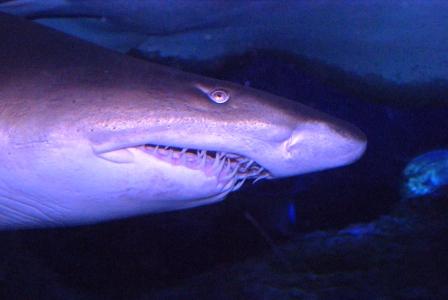
The answer to this one is yes and no. Land animal skeletons and tongues are very different to fish and sharks, with very different jobs.
Land Animals
Our tongues are full of muscles and covered with sensitive skin and lots of nerves. They are very mobile and help mammals eat and drink, move food around while we are chewing and help us move food to our throats to swallow. Bears, elephants and anteaters all use their tongues to help collect food and bring it into their mouths. And many animals lap water using their tongues.
Land animal tongues are covered in tastebuds that warn us what is in our food before we swallow it. Bitter tastes often mean poisons and we can taste if something is rotten much better than with smell or sight. So our tongues help protect us. And in humans they are essential for talking.
Sharks
Fish and especially sharks are built quite differently to us. Remember they don’t have lungs but breath through the gills on their sides. Sharks have a skeleton made of cartilage, like your ears and nose. It is tough but not as strong as our bones. They have a long piece of cartilage running up their front to support the gill arches and this extends all the way forwards into their mouth (or their mouth extends back a long way!).
The very end of this cartilage is called the basihyal (ba-see-HI-al) and this is the shark’s tongue. For most sharks it doesn’t do very much but just sits in the bottom of their mouth. But for other sharks it does very interesting things.
Another of the differences between animals with lungs and fish is that they cannot suck. That may not sound very important, but think about it for a minute. They don’t have hands or claws to bring food to their mouth. They don’t have a tongue to reach out and get it. About the only things they can do are sit there with their mouth open and hope it drifts in, run into it and catch it, or somehow manage to suck it in. Most invertebrates like corals or sponges do the first, herbivores and lots of predators like tuna do the second, and some sharks use their tongue to do the third.
In order to suck, you need to somehow make a hole bigger. This is how we breathe – our ribs open out and make our lungs bigger and this sucks air into them. But sharks don’t have ribs and lungs so they can’t do it that way. Instead there are some sharks that have large basihyals. They use some of the muscles around their throat to pull them down and back, which makes their mouth bigger and creates suction. You can try this yourself by opening your jaw while keeping your lips closed, your cheeks will get sucked in. Then the sharks can either hunt by sucking fish into their mouths, or one type of shark actually suctions on to its prey and takes a bite out of it. This is called a cookie-cutter shark because it looks like it’s cut a round hole in the animal, many of them survive and heal.
Bites taken by a cookiecutter shark by sucking onto the fish using its tongue.
Enjoy this article? Subscribe to the weekly newsletter to hear about them all.
Or grab my RSS feed 


Facebook
Twitter
RSS
{ 2 comments… read them below or add one }
Awesome! Thankyou. I’ll read it with him when I get home.
How interesting!
Kelly´s latest amazing offering ..Make Your Own Unicorn Horn
{ 1 trackback }